Emerging Economies to Match Advanced Ones in Renewable Growth, IEA Says
At a Glance
The IEA says emerging economies outside China will add as much new renewable capacity as advanced economies for the first time.
The energy crisis tied to the US-Iran war is driving the shift.
Grid connection delays remain a major obstacle.
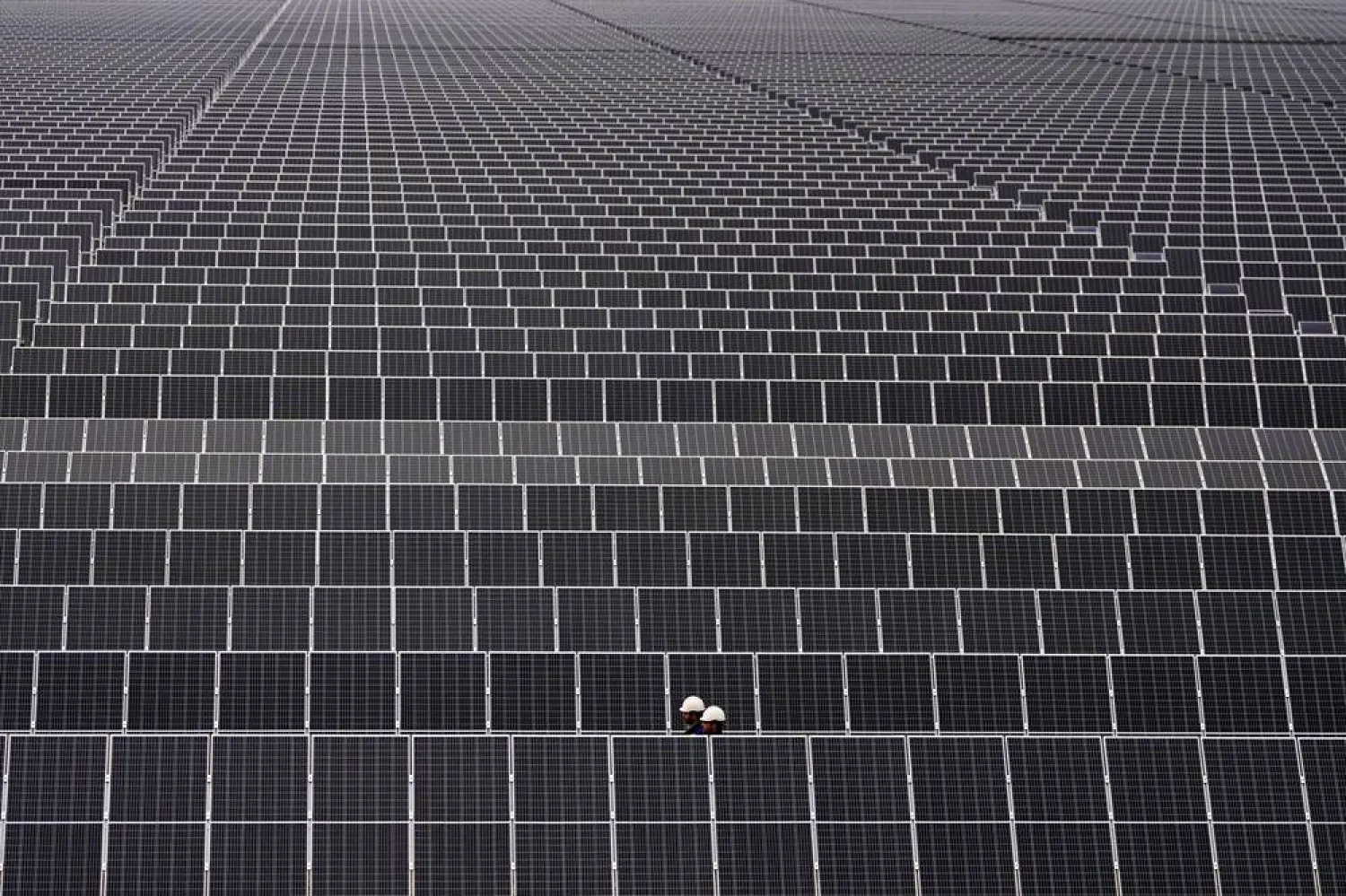
Emerging and developing economies outside China are set to match advanced economies in new renewable energy capacity over the next five years, the International Energy Agency said Friday, as the current energy crisis accelerates the shift.
Key Statements and Focus Area
IEA on Global Growth: Global renewable capacity is forecast to increase by almost 4,800 gigawatts between 2026 and 2031. — International Energy Agency, annual outlook.
IEA on Emerging Markets: Capacity growth in Southeast Asia, Africa and the Middle East is expected to triple over the period, led mainly by solar installations. — International Energy Agency.
Focus Area: The IEA's forecast of a more evenly spread global renewables expansion, driven by the energy crisis.
Emerging and developing economies are expected to add about 1,100 GW, roughly the same as advanced economies, while China adds around 2,550 GW.
China remains the biggest contributor, though its share is forecast to fall to 53% by 2031 from 60% in 2025.
India is emerging as the second-fastest deployer and is expected to more than double its contribution to global growth, to nearly 8.5%.
Grid connection delays are the main brake. Projects awaiting connection worldwide rose 60% over the past year, equal to four times the wind and solar capacity connected in the same period.
Grid constraints are expected to hold back advanced economies, with annual additions in Europe through 2031 staying broadly in line with 2025 levels.
Renewables are projected to meet 6% of global transport energy demand by 2031, and higher fuel-blending mandates led the IEA to raise its biofuels forecast by 40% from last year's report.
FYI
Gas and oil prices have soared this year as the US-Iran war disrupts traffic through the Strait of Hormuz, a key route for global oil and gas trade.
The disruption has pushed many countries to look for domestic, cheaper energy sources, with solar leading the way in much of the developing world.
Dive Deeper: Handpicked Stories for You
Follow Channel8 for continuous updates:
China Pays Record Premiums as Copper Supplies Tighten Globally