Hurricane Isaias Leaves Two Dead as Flood Threat Spreads
At a Glance
- Hurricane Isaias killed two people after trees fell onto homes in Florida and Alabama.
- Nearly 700,000 electricity customers across four states lost power by midday Saturday.
- The storm weakened after making landfall in Florida but continued to bring heavy rain and dangerous winds.
- Flood watches remained in effect across parts of the southeastern United States and the southern Appalachians.
Hurricane Isaias left two people dead and caused widespread damage along the US Gulf Coast before moving north on Saturday, bringing heavy rainfall and the risk of flash floods and tornadoes across parts of the Southeast.
Key Statements and Focus Area
- Flood Risk: “The risk of flooding is still high.” — Florida Governor Ron DeSantis
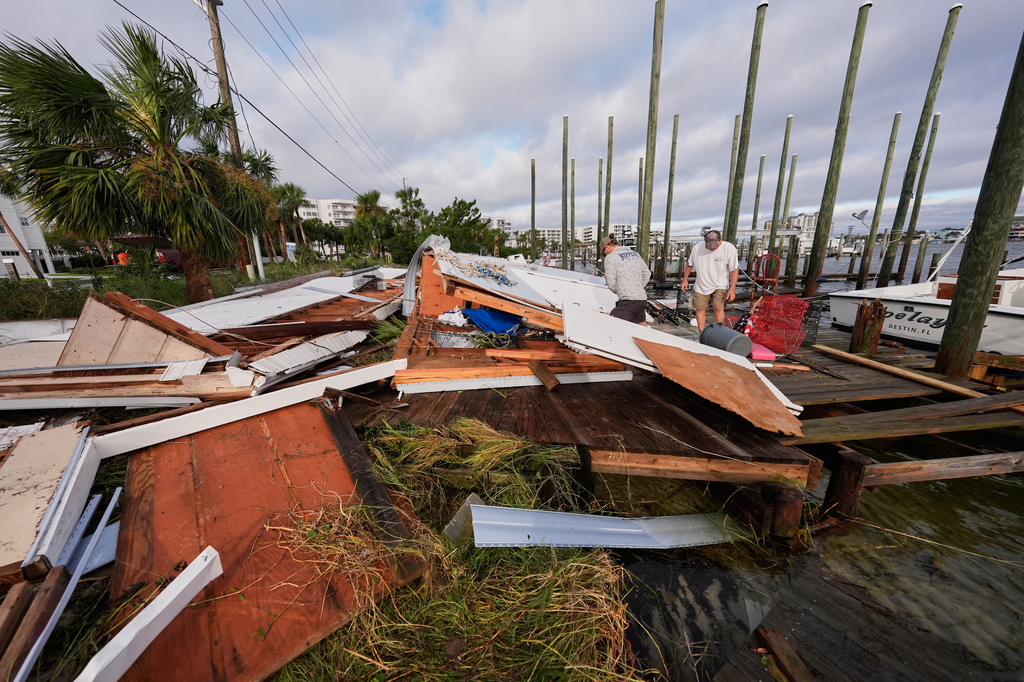
- Storm Damage: Hurricane-force winds damaged buildings, uprooted trees, and brought down power lines across parts of Florida and Alabama.
- Focus Area: The storm’s aftermath and continuing threats from flooding and severe weather across the southeastern United States.
Isaias made landfall near Destin, Florida, on Friday as a Category 2 hurricane. It weakened overnight and was downgraded to a post-tropical cyclone, but forecasters warned that dangerous conditions would continue. In Florida’s Panhandle, strong winds tore the roof off a hotel in Pensacola and damaged buildings in Panama City Beach and Destin. Pensacola’s mayor also reported damage at the city’s airport.
In Escambia County, a woman died after a tree fell on her home, according to Sheriff Chip Simmons. In Birmingham, Alabama, a second person was killed when a tree fell onto a house, Fire Chief Cory Moon said. Another person was rescued from the house and treated at the scene.
Authorities in Mobile, Alabama, reported fallen trees, damaged power lines and numerous road closures. By midday Saturday, nearly 700,000 customers across Florida, Alabama and two other states were without electricity. Despite the damage, some coastal roads had reopened by Saturday morning. Residents in parts of the Gulf Coast also reported less severe impacts than during previous hurricanes.
The National Hurricane Center warned that heavy rain could continue across the Southeast and southern Appalachians. Parts of Georgia and the Carolinas could receive up to 10 inches of rain, although most areas were forecast to receive between 3 and 6 inches.
Isaias was expected to move into the Tennessee Valley before reaching the mid-Atlantic region on Sunday. The forecast prompted officials at Charlotte Motor Speedway to postpone Saturday’s Blue Cross NC 300 until Sunday night.
Meanwhile, in the Pacific Ocean, Hurricane Simon strengthened to Category 4 as it approached Mexico’s coast, with heavy rain, flooding, and mudslides expected in parts of southwestern Mexico. Tropical Storm Rachel was also forecast to bring strong winds and rain to northern Mexico and Southern California over the weekend.
FYI
Hurricanes can continue to cause serious damage after weakening or moving inland. Heavy rainfall may trigger flash floods well after the strongest winds have passed, particularly in areas with saturated ground, steep terrain, or limited drainage.
The Atlantic hurricane season typically runs from June through November. Storm impacts vary widely depending on their strength, path, rainfall, and the vulnerability of affected communities.
Dive Deeper: Handpicked Stories for You
Follow Channel8 for continuous updates:
Thailand Flooding Kills Eight As Bangkok Declares Disaster

.jpg)