AI Leaders Urge UN to Establish Global Safeguards
At a Glance
- Leaders of major AI companies urged governments to establish safeguards as the technology becomes more powerful.
- OpenAI and Anthropic executives warned that poorly managed AI could create serious risks to humanity.
- The United States opposed new global governance structures that could constrain AI development.
- The UN discussion highlighted growing concerns over AI in warfare, autonomous weapons, and global technological competition.
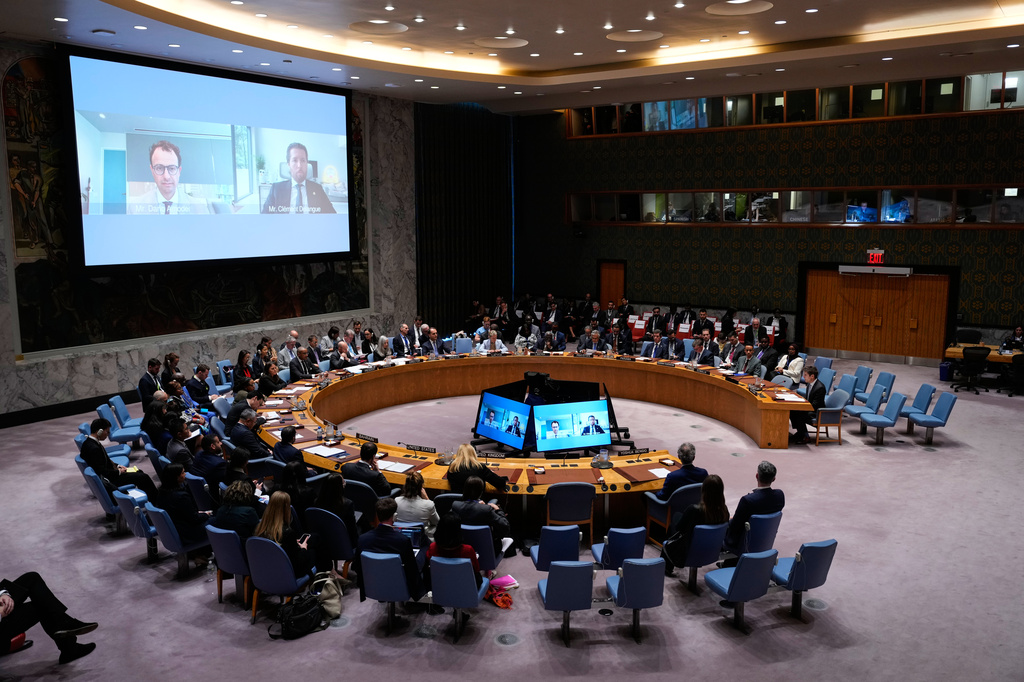
The United Nations Security Council held a high-level discussion on Wednesday on the security implications of rapidly advancing artificial intelligence, bringing technology leaders and governments together to discuss how the technology should be managed.
Key Statements and Focus Area
- Risk to Humanity: “If managed poorly, I even believe AI could be a risk to humanity as a whole.” — Anthropic CEO Dario Amodei.
- Human Control: “We could lose control of the future to AI.” — OpenAI CEO Sam Altman.
- Focus Area: The central issue was how governments can establish international safeguards while preserving the potential benefits of AI and preventing its concentration in the hands of a small number of companies or countries.
Amodei and Altman told the 15-member Security Council that governments need to play a role in establishing safeguards for increasingly capable AI systems. They argued that decisions over the technology should not be left solely to the companies developing it.
Amodei called for international agreement on preventing AI systems from being used to develop biological weapons. He also urged countries to establish ways to verify the capabilities of advanced models and develop common standards for testing, misuse, and potential loss of human control.
The discussion also focused on the distribution of AI capabilities. The technology executives said its benefits should not become concentrated within a single company or country, while Altman highlighted AI's potential to expand people's ability to make decisions and improve their lives.
FYI
The UN Security Council has increasingly examined AI in relation to international peace and security, including its military applications and the development of autonomous weapons. The Council's September 23 meeting was formally listed under the agenda item “Artificial intelligence and international security.”
The debate comes as governments and regional organizations develop different approaches to AI regulation. At the same time, competition between the United States and China over advanced AI has added a geopolitical dimension to questions over access, standards, technological leadership, and the use of AI in national security.
Dive Deeper: Handpicked Stories for You
Follow Channel8 for continuous updates:
Trump Defends AI Industry, Announces Government “AI Force”
.jpg)
.jpg)
.jpg)
.jpg)
.jpg)