Erbil Slams Baghdad Over Sixty Five Trillion Dinar Budget Trap
At a Glance
The Kurdistan Region contributed over 65 trillion IQD to federal sovereign expenditures but received zero funding from it.
Out of 144 months of budgeted allocations, Baghdad only financed 46 months of public sector salaries over 12 years.
A recent KRG report labels the "actual expenditure" model a systematic mechanism designed to minimize Kurdish financial entitlements.
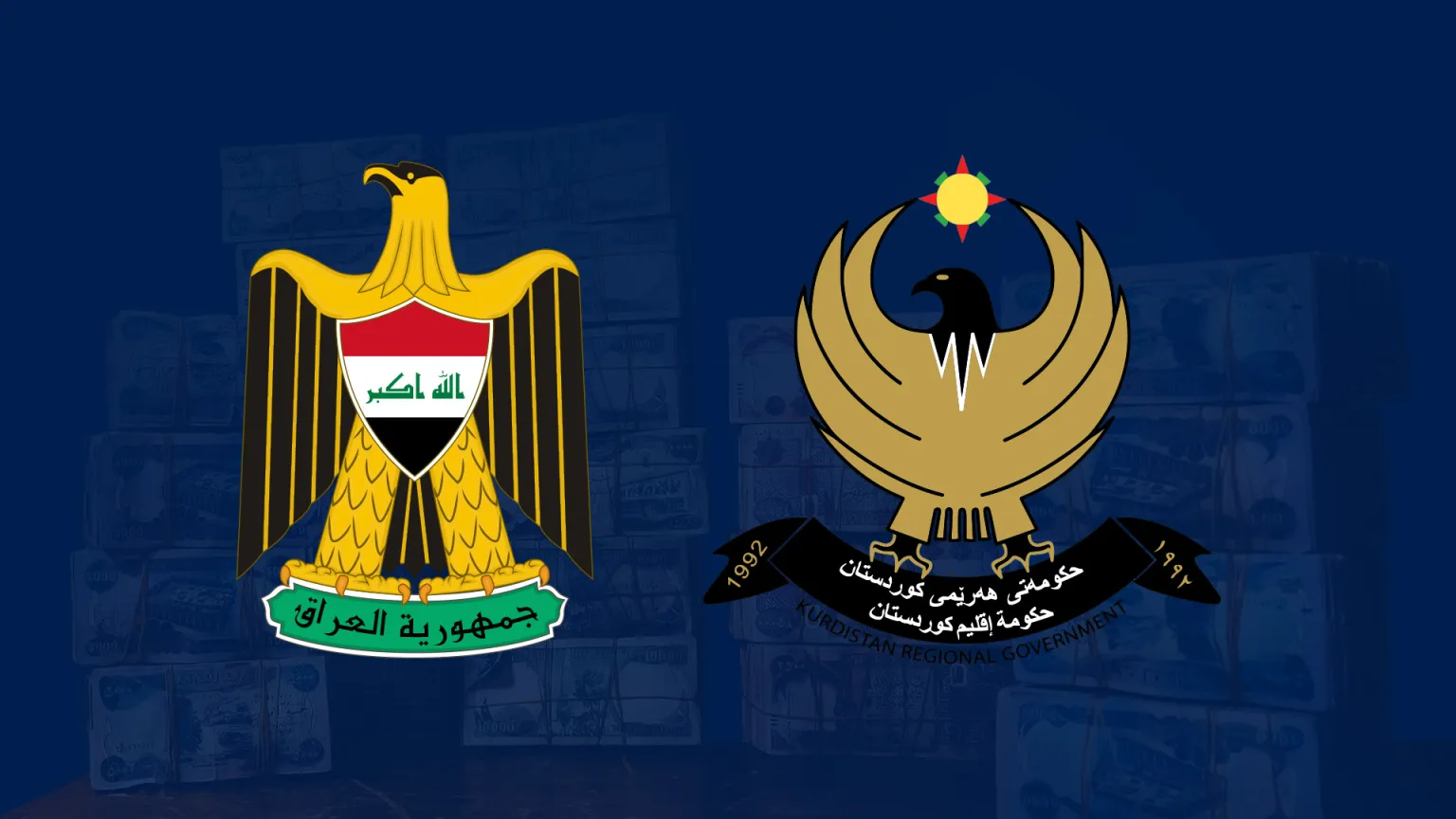
The Kurdistan Regional Government (KRG) has released a comprehensive statistical report exposing what it terms an intentional and systematic mechanism by federal authorities to deprive the region of its lawful fiscal shares.
Key Statements and Focus Area
Data compiled by the Department of Media and Information, alongside the Ministry of Finance and Economy, reveals that despite Erbil contributing over 65 trillion IQD to Iraq’s sovereign expenditures between 2014 and 2025, the federal government failed to return a single dinar from those specific sovereign accounts.
According to the official datasets, Iraq's cumulative budget over the 12-year period reached an astronomical 1 quadrillion and 767 trillion IQD.
While the Kurdistan Region's gross legal share before sovereign deductions exceeded 245 trillion IQD, standing at 146 trillion IQD on paper after deductions, Baghdad realistically transferred only 41 trillion IQD in funding.
This practical execution means the Region was granted a mere 2.04% of the total national budget, directly violating the official 17% allocation framework set from 2014 to 2017, and the ungrounded 12.67% share applied from 2018 onward.
The fiscal throttling had an immediate, devastating impact on public sector employees, covering only 46 months of salaries out of 144, leaving eight full years of employee compensation entirely unfunded.
This financial starvation ultimately forced Erbil to initiate direct independent oil exports to sustain basic local livelihoods.
Analysts highlight that the expansion of sovereign expenditure categories from 10 to 100 items since 2015 acted as an accounting trap.
For example, during the 2023–2025 three-year budget cycle, Baghdad deducted a flat 12.67% from gross sovereign funds (totaling 18.1 trillion IQD) instead of calculating the deduction equitably against Erbil's net share, inflicting an arbitrary 8.2 trillion IQD loss on the region.
Furthermore, the federal government has completely ignored the 2024 general census results showing that Kurds make up 14.14% of the Iraqi population, choosing instead to squeeze the region's share down to 12.70% in the draft 2027 budget.
FYI
Dr. Farhad Alaaldin, advisor to the Iraqi Council of Ministers, informed Channel8 earlier that the cabinet's scheduled Saturday meeting has been postponed to tomorrow to discuss the 31-article draft budget for 2027.
During this upcoming meeting, several clauses are expected to be amended before the bill is forwarded to parliament, including the complete removal of the 12 trillion dinars of debt previously demanded from the Kurdistan Region under Article 10.
Kurdish negotiators intend to dispute the controversial actual expenditure model which threatens to slash their upcoming budget allocation.
Recent figures indicate that retaining this restrictive model will cause the Region's national funding to plummet to a critical low of just 6.1%.
If implemented, Erbil's federal funding will drop sharply to roughly 12.8 trillion dinars. This falls vastly short of the 29 trillion dinars initially requested by the KRG to secure public salaries and local governance.
Consequently, Kurdish lawmakers are escalating pressure on federal entities to completely overhaul Article 10 before finalizing the 2027 fiscal budget.
Dive Deeper: Handpicked Stories for You
Follow Channel8 for continuous updates:
Iraq Postpones Cabinet Budget Meeting to Tuesday
Baghdad Offers Budget Flexibility But Maintains Strict Oil Redlines
Baghdad to Receive New Kurdistan Region Budget Proposal
Kurdistan Region Pushes to Secure Political Prisoner Stipends in 2027 Iraqi Budget