Iraq Sets Withdrawal Deadline for Kataib Hezbollah in Jurf al-Sakhar
At a Glance
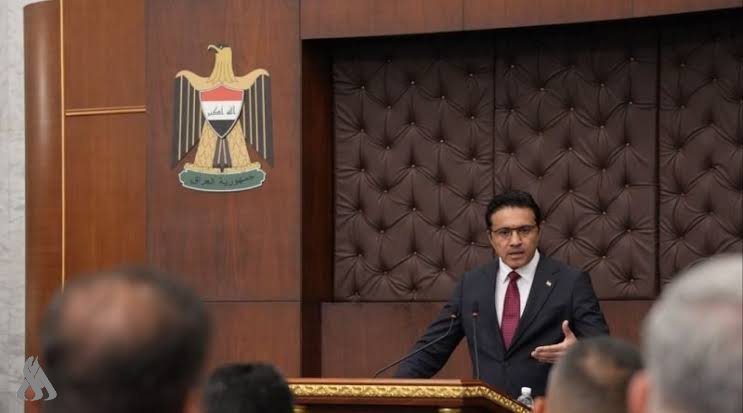
Government spokesperson Haider al-Aboudi says an armed faction has been given a deadline to leave Jurf al-Sakhar, although he did not disclose the exact date.
A government investigation identified alleged pipeline tampering, two refineries, a tanker and fuel-storage tanks across six inspected sites.
Prime Minister Ali al-Zaidi has directed the armed forces to enter the area and ordered suspected perpetrators to be referred to the judiciary.
Baghdad says investigations into suspected oil smuggling will extend to other parts of Iraq, including areas where federal authorities are coordinating with the Kurdistan Region.
Iraq's government says it has set a deadline for the armed faction controlling Jurf al-Sakhar to withdraw, as Prime Minister Ali al-Zaidi orders the armed forces to enter the Babil province area following an investigation into alleged oil smuggling.
Key Statements and Focus Areas
Deadline for Armed Faction's Withdrawal
Government spokesperson Haider al-Aboudi told the Iraqi News Agency that a deadline had been set for the armed faction to leave Jurf al-Sakhar
“There is a deadline set for the armed faction to leave Jurf al-Nasr, and this deadline is not far off.”
He did not specify the date during the interview. Separate reports citing government and political sources have identified November 20 as the deadline for handing over security responsibility.
Investigation Identifies Six Sites
Al-Aboudi said the government investigation committee inspected six locations identified in a report by the Federal Intelligence and Investigations Agency.
According to the spokesperson, investigators found:
Evidence of tampering with oil pipelines.
Attempts to conceal signs of pipeline interference.
Two refineries.
A tanker and fuel-storage tanks.
Armed Forces Ordered to Enter the Area
Al-Aboudi said the prime minister, in his capacity as commander-in-chief, had directed the armed forces to enter Jurf al-Sakhar.
He described the deployment of official security forces as the normal arrangement for managing cities and districts, with security responsibilities assigned to legally authorized forces operating under the commander-in-chief.
Investigation to Extend Beyond Jurf al-Nasr
The spokesperson said security agencies had already begun investigating suspected oil-smuggling activities in several locations across Iraq.
He added that the government had directed the Integrity Commission to investigate the Jurf al-Sakhar case and ordered suspected perpetrators to be referred to the judiciary.
Baghdad-Kurdistan Coordination
Al-Aboudi said the government was coordinating with the Kurdistan Region and had received positive indications of cooperation from security representatives officially assigned by Baghdad to investigate suspected oil smuggling.
He also said federal forces could enter areas within the Kurdistan Region, referring to the government's constitutional responsibilities. He did not announce any specific deployment or operation in the Region.
The Iraqi government says it has set a deadline for an armed faction to leave Jurf al-Nasr, as Prime Minister Ali al-Zaidi moves to place the strategically located area under the authority of official security forces following an investigation into alleged oil smuggling.
Speaking in an interview with the Iraqi News Agency, government spokesperson Haider al-Aboudi said the government had established a deadline for the faction's withdrawal, adding that it was not far off.
He said the prime minister had also directed the armed forces to enter the area, describing the deployment of official forces as a normal responsibility of the state in managing cities and administrative districts.
Al-Aboudi outlined the findings of a high-level investigation committee, which inspected six sites based on coordinates identified in a report by the Federal Intelligence and Investigations Agency.
According to the spokesperson, investigators documented what he described as clear tampering with oil pipelines passing through the area, as well as attempts to conceal evidence of the interference.
The committee also identified two refineries, a tanker and storage tanks. Al-Aboudi said the findings had been submitted to the prime minister.
The government has ordered the referral of suspected perpetrators to the judiciary and instructed the Federal Integrity Commission to take part in investigating the case. Security agencies have also been directed to prevent unauthorized tanker trucks carrying oil or petroleum products from leaving suspected smuggling locations.
Al-Aboudi stressed that the investigation would not be limited to Jurf al-Sakhar, saying security agencies had begun carrying out related duties in several other areas across Iraq.
The government spokesperson also addressed Baghdad's coordination with the Kurdistan Region, saying there were positive indications of cooperation with federal security representatives officially tasked with tracking suspected oil-smuggling activities.
He said the government was acting within the constitutional framework governing relations between the federal government and the Kurdistan Region, adding that regional powers did not place the Region outside the constitutional framework of the Iraqi state.
Al-Aboudi further said federal forces could enter areas within the Kurdistan Region, but did not identify a specific location, operational plan or deployment.
The latest statements follow the dismissal of nine security, military and administrative officials after the Jurf al-Nasr investigation. The government has also publicly identified Kataib Hezbollah as the faction controlling the area and accused it of involvement in the alleged smuggling operation.
Kataib Hezbollah has rejected the allegations, describing the investigation as fabricated and saying its members accompanied the committee during its inspection. The group maintains that investigators found no violations of the oil pipelines.
Separate reports have said the government is seeking the faction's withdrawal by November 20, while political figures are reportedly mediating to secure a transfer of security responsibilities to government forces without a direct confrontation.
FYI
The Jurf al-Nasr dispute has become a test of Prime Minister Ali al-Zaidi's efforts to strengthen state authority over areas where armed factions maintain significant influence. The government's latest statements also connect the investigation to a broader effort to monitor suspected oil-smuggling routes across Iraq, including areas involving federal-Kurdistan coordination. Any federal security deployment in the Kurdistan Region would raise important questions about constitutional powers and coordination between Baghdad and Erbil. For now, the government has described cooperation with regional security representatives as positive and has not announced a specific operation inside the Region.
Dive Deeper: Handpicked Stories for You
Follow Channel8 for continuous updates:
Iraqi President Calls on Trump to Return to Ending Wars
Iraq PM Chairs Meeting on National Emergency Preparedness
Iraq Indefinitely Delays 2027 Budget Bill Over Kurdish Disputes, Lawmaker Says
.jpg)