Iraqi Prime Minister Inspects Najaf Refinery Expansion Project Progress
At a Glance
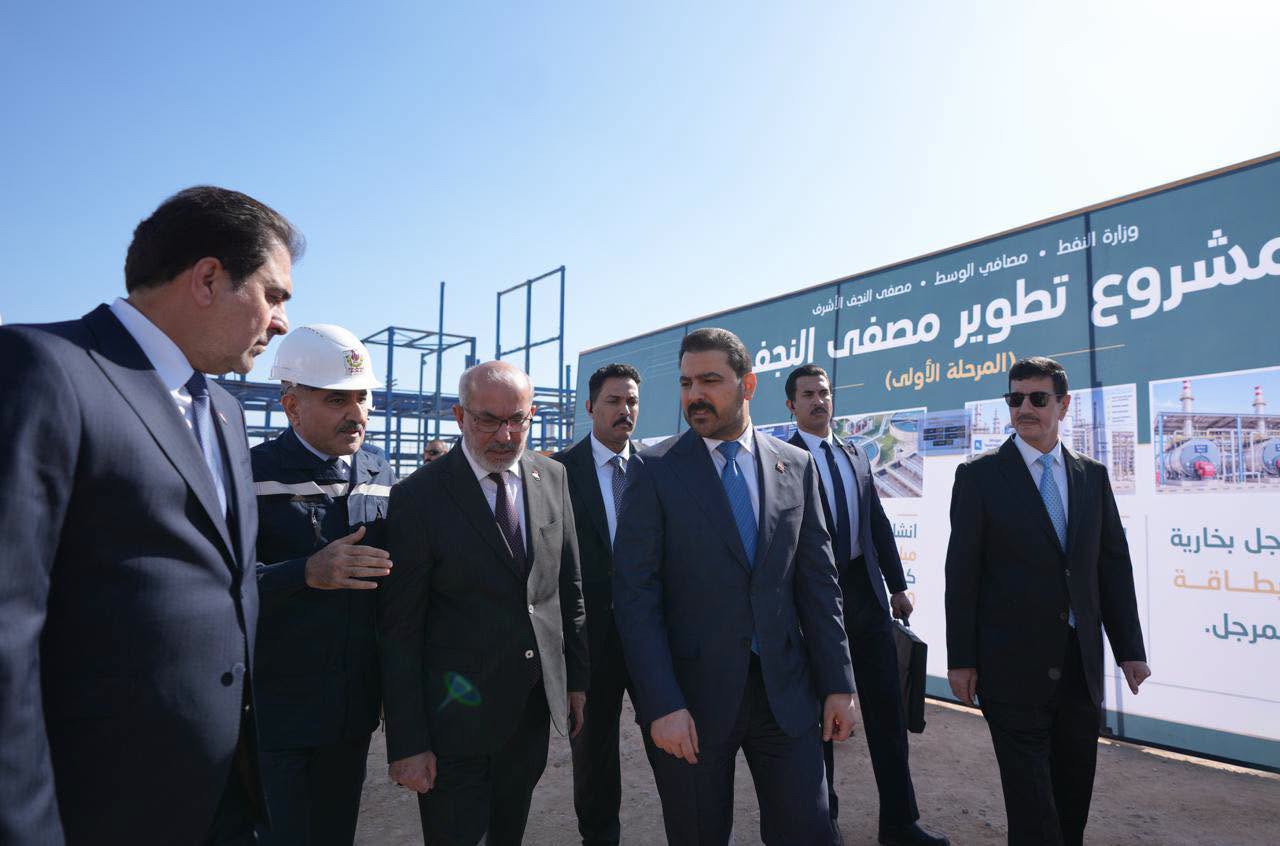
The Iraqi Prime Minister visited the Najaf al-Ashraf Refinery to review expansion progress.
Al-Zaidi urged officials to overcome technical and logistical obstacles to ensure timely completion.
The project adds a 70,000-barrel-per-day refining unit to the facility’s current 30,000-barrel daily capacity.
Iraqi Prime Minister Ali Faleh al-Zaidi conducted a field visit to the Najaf al-Ashraf Refinery on Tuesday to review construction progress on a 70,000-barrel-per-day expansion project aimed at more than tripling the facility's refining capacity.
Key Statements and Focus Area
During the tour, al-Zaidi received a detailed briefing from refinery officials on completion rates and the main technical and logistical challenges facing implementation, according to a statement from his media office.
The prime minister stressed the need to resolve existing obstacles to ensure the project is completed within its scheduled timeframe.
Al-Zaidi emphasized the importance of adopting modern refining technologies and adhering strictly to environmental standards throughout construction and operation.
According to the Prime Minister’s Media Office, the expansion includes building a new 70,000-barrel-per-day refining unit alongside supporting infrastructure, including power supply systems, an industrial wastewater treatment unit, and oil storage tanks.
The Najaf al-Ashraf Refinery currently operates at a capacity of 30,000 barrels per day, producing gas oil, kerosene, fuel oil, and naphtha to help meet Najaf Governorate's local fuel demand.
FYI
The Najaf refinery expansion project was officially launched in July 2025 with the goal of raising the facility’s total capacity to 100,000 barrels per day and supplying fuel to power stations, cement factories, and asphalt plants across the Middle Euphrates region.
The project is part of Baghdad’s broader push to expand domestic refining capacity, achieve self-sufficiency in petroleum derivatives, and reduce reliance on costly fuel imports.
Although Iraq briefly halted fuel imports in late 2025 after upgrading major facilities such as the Karbala, Basra, and Baiji refineries, surging domestic demand later forced the government to resume some gasoline imports—making timely completion of regional expansions like Najaf a key priority for al-Zaidi’s administration.
Dive Deeper: Handpicked Stories for You
Follow Channel8 for continuous updates:
Al-Aboudi: Dialogue Are Still Ongoing With Kurdistan Region Regarding Budget
Iraqi Parliament Speaker Reviews Jurf al-Sakhar Smuggling Report With Security
Oil Ministry: Dhi Qar Company Completes Half of Nasiriyah Project
.jpg)