KRG Rejects 2027 Budget Draft, Demanding Complete Constitutional Review
At a Glance
The Kurdistan Regional Government called on federal authorities to block the 2027 budget vote in its current form.
The cabinet rejected unilateral federal decisions and demanded a review to safeguard its constitutional rights.
The negotiating team was instructed to present constitutional evidence to federal parties to correct invalid budget clauses.
Erbil expects the al-Zaidi cabinet to use this budget to permanently settle outstanding financial disputes instead of repeating past conflicts.
The Kurdistan Regional Government has called on federal authorities to block a vote on the 2027 budget draft in its current form, demanding a thorough review to safeguard the region’s constitutional rights and financial entitlements under the cabinet of Prime Minister Ali al-Zaidi.
Key Statements and Focus Area
After today's session of the KRG cabinet, the Council of Ministers “reiterated that the Kurdistan Region is a constitutional and federal entity whose rights, authorities, and financial entitlements are protected under the constitution.”
The KRG cabinet urged “the Federal Council of Ministers to prevent the draft Federal General Budget Law from being brought to debate or voted on in its current form before a meticulous and necessary review is conducted to guarantee the Region's constitutional rights and financial entitlements.”
The delegation briefed the council on recent budget talks with Baghdad regarding Article 10 of the 2027 draft.
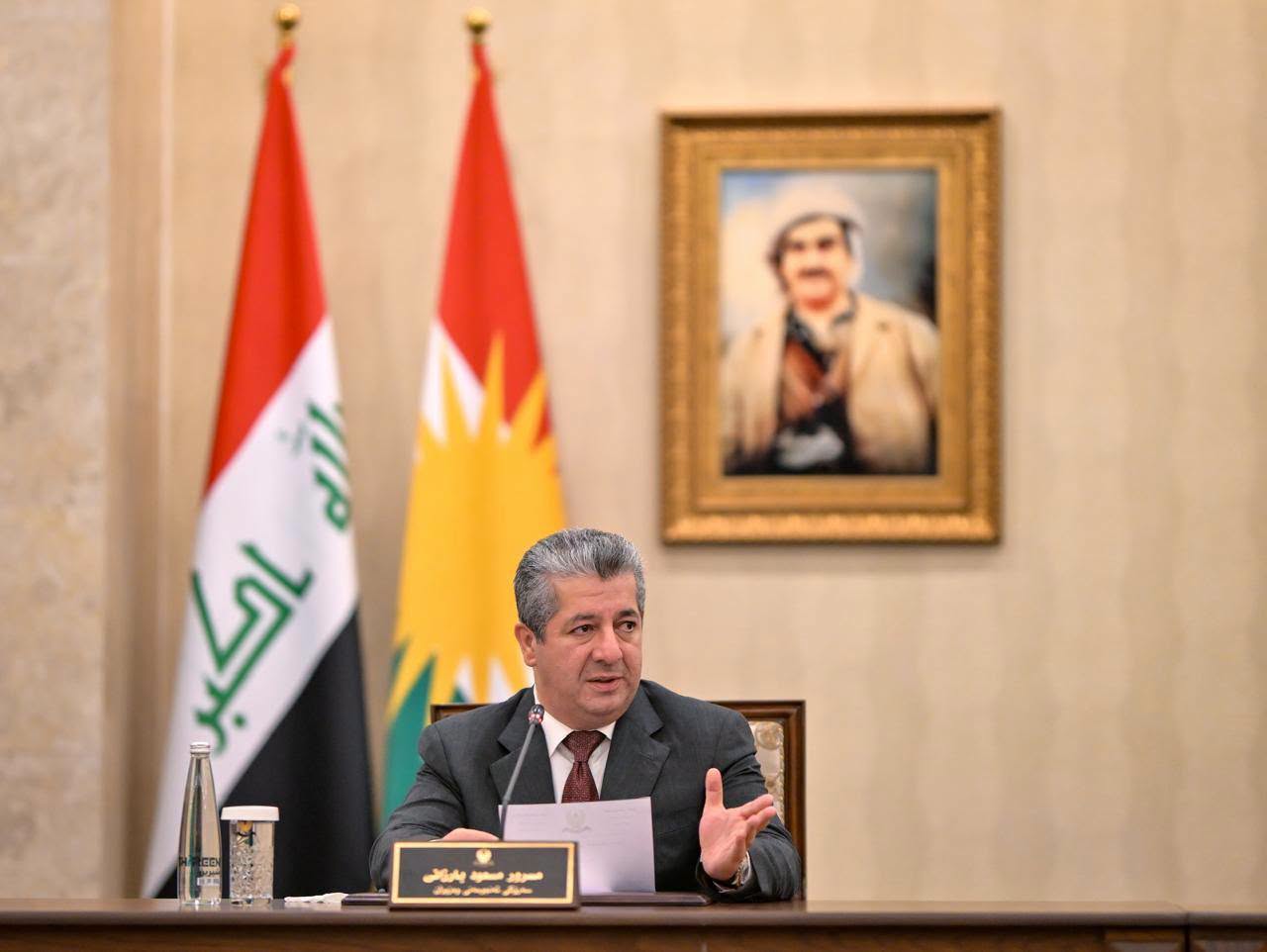
The Council of Ministers convened under the chairmanship of Prime Minister Masrour Barzani to review negotiations over oil and energy dossiers following a recent visit by a high-level federal government delegation within the framework of the draft Federal Budget Law.
The cabinet emphasized that the federal general budget must be drafted on the basis of constitutional principles, equity, and genuine partnership, “rather than through unilateral decisions and measures taken by the federal government.”
The session stressed that Kurdistan's budget share must be fixed at 14.14% based on the latest census to secure its financial rights.
The Council instructed the delegation to clarify “the unconstitutionality and invalidity” of the 2027 budget clauses that violate regional entitlements.
The team will present the Region's clarifications, alternative proposals, and constitutional evidence to federal parties for draft revisions.
The cabinet noted that Kurdistan expects the budget under Iraqi Prime Minister Ali al-Zaidi's cabinet to settle outstanding financial issues, “rather than repeating the same disputes and disagreements in the coming year instead of resolving past problems.”
The Council emphasized that the KRG has shared all relevant data transparently, noting that joint monthly and quarterly audits are continuously conducted through constitutional institutions.
“Therefore, it is unacceptable to rely on groundless, unsubstantiated allegations and information, or to impose unilateral conditions and decisions within the budget,” the Council highlighted.
The officials further reaffirmed that while remaining committed to its obligations, the government is determined to secure the rights of its citizens and “will not relinquish them.” Concluding the session, the cabinet backed its negotiating team to continue dialogue with Baghdad to protect regional entitlements and “strengthen the principles of federal partnership.”
FYI
The current friction between Erbil and Baghdad over the 2027 federal budget stems from an accumulation of unmet expectations, escalating financial conditions, and deep political divisions within Iraq's ruling coalition.
Deadlocked High-Level Negotiations
Recent high-level talks in Erbil between a senior Iraqi government delegation—led by Acting Parliament Speaker Mohsen Al-Mandalawi, the Deputy Prime Minister for Energy, and the Ministers of Oil and Electricity—and KRG officials failed to yield tangible results.
The discussions focused primarily on resolving the Kurdistan Region's revenue share, securing financial entitlements, and establishing technical procedures to resume halted oil exports.
Despite the urgency of the economic crisis, the two sides concluded negotiations without an implementation plan, agreeing only on a loose timeline to continue talks.
Disputed Budget Allocation & Stringent Terms
Article 10 of the draft 2027 budget law caps the Kurdistan Region's financial allocation at 12.67%, falling short of Erbil's demand for a 14.14% share aligned with the latest population census data.
Baghdad has tied this funding to increasingly strict economic obligations, requiring Erbil to hand over up to 445,000 barrels of oil per day along with surplus natural gas production.
Federal terms also dictate that the KRG must forfeit its non-oil internal revenues, including regional taxes and customs fees, while independently settling outstanding debts with the Trade Bank of Iraq (TBI).
Deepening Stalemate and Legislative Delays
In response to what it views as excessive federal overreach, the KRG has rejected Baghdad's conditions, freezing progress on the inclusion of Kurdish public sector employment allocations until a fairer comprehensive deal is struck.
Due to these severe disagreements, the Iraqi Council of Ministers' submission of the draft budget law to Parliament has faced systemic delays.
The draft legislation is expected to remain stalled until at least mid-November, as political factions within the ruling State Administration Coalition remain deeply fractured over its core financial and regional provisions.
Dive Deeper: Handpicked Stories for You
Follow Channel8 for continuous updates:
Baghdad Delays Draft Budget Until Next Month Due to Disputes
Iraqi Finance Committee reviews 2027 budget tariffs and customs automation
Iraqi Federal Delegation to Visit Kurdistan Region to Discuss several files
KRG Delegation Visits Baghdad for 2027 Budget Talks
Draft 2027 Budget Imposes Heavy Restrictions on Kurdistan Region