Homo Erectus Thrived in Southern China's Dense Forests, Challenging Extinction Theory
At a Glance
Two studies show Homo erectus adapted to dense forests in southern China.
Fossil teeth date to between 324,000 and 184,000 years ago.
The findings challenge the prevailing theory of why the species vanished from Asia.
Two studies published Wednesday in Nature suggest Homo erectus, a distant human relative, lived in the dense forests of southern China, overturning the view that it could not adapt to forest environments.
Key Statements and Focus Area
Paleontologist on the Old View: "They couldn't survive in the subtropical forest environments in southern China. So the forests in southern China formed a barrier for them to migrate. That's the former view. But our findings turn that around completely." — Yingqi Zhang, paleontologist, Chinese Academy of Sciences.
Researcher on Human Uniqueness: "If we're not as unique as we have always thought ourselves, what was the actual cause of it, why we survived, and the others didn't." — Kira Westaway, researcher, Macquarie University.
Focus Area: New evidence that Homo erectus adapted to rainforest and what it means for theories of its extinction.
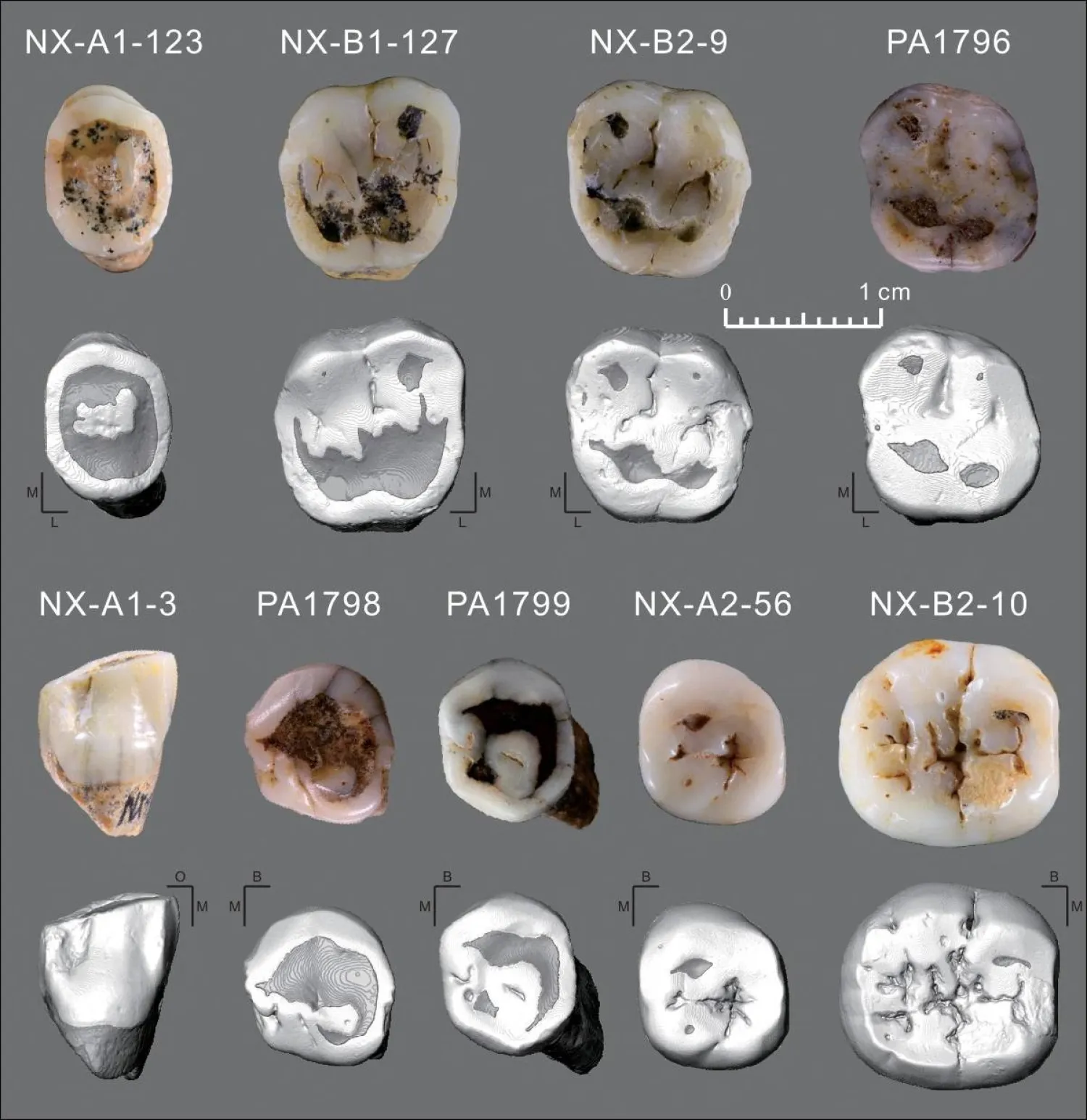
The research centers on nine fossilized hominin teeth found in two neighboring caves in southern China.
Protein analysis attributed eight to Homo erectus, while the ninth is still unidentified.
Dating placed them between 324,000 and 184,000 years ago, filling a gap, as the most recent Homo erectus fossils in China had dated to about 400,000 years ago.
A second study reconstructed the environment from nearly 20,000 animal teeth, likely collected by porcupines, including orangutans, elephants, rhinoceroses, and extinct species such as Stegodon and Megalovis.
Carbon isotopes in their enamel pointed to a very dense rainforest, according to geoarchaeologist Renaud Joannes-Boyau.
Isotope analysis of growth layers also showed that Homo erectus individuals migrated long distances in childhood, from present-day Vietnam, about 250 kilometers from the caves.
Joannes-Boyau called the species "a survivor, a champion of resilience and adaptation."
Westaway said the work raises more questions than it answers.
FYI
Homo erectus survived for nearly two million years, far longer than Homo sapiens, which has existed for about 300,000.
The species spread from the African savannas across Asia, and the most recent fossils, about 108,000 years old, were found in Java.
Dive Deeper: Handpicked Stories for You
Follow Channel8 for continuous updates:
Scientists Find Strongest Evidence Yet of Dinosaur Red Blood Cells