Voyager 1 Reaches One Light-Day From Earth, a First for Any Spacecraft
At a Glance
NASA calculates Voyager 1 has reached a distance of one light-day from Earth.
No other spacecraft has gone this far.
Confirmation from the probe is expected in about a day.
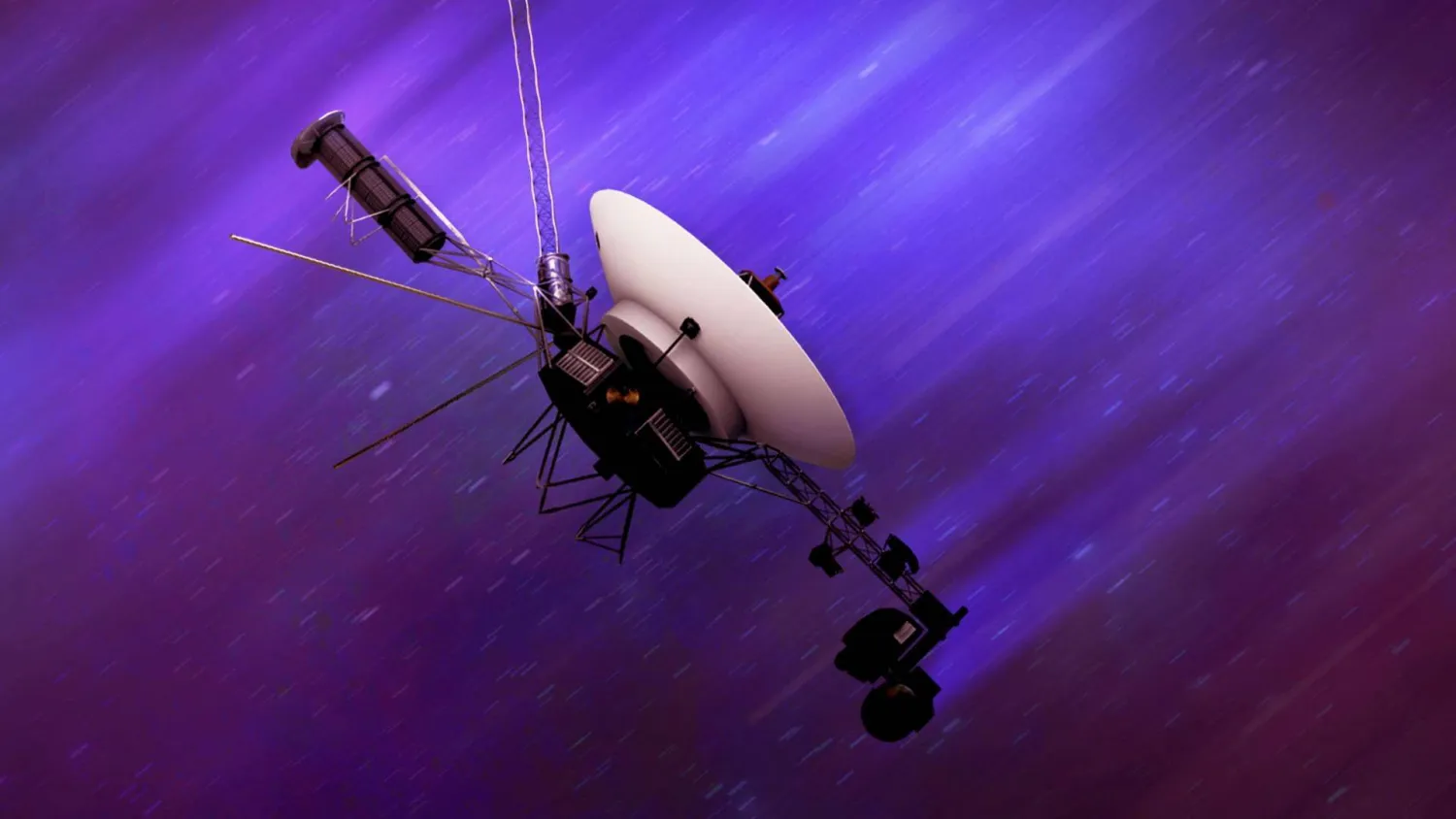
NASA's Voyager 1 probe, launched in 1977, is believed to have reached a distance of one light-day from Earth on Wednesday, a milestone no other spacecraft has achieved.
Key Statements and Focus Area
Project Manager on the Milestone: "Reaching one light-day is an astounding feat, one that I never expected to see." — Suzanne Dodd, Voyager project manager.
Project Manager on the Big Question: "Where does the Sun's influence end and pristine interstellar space begin? Perhaps Voyager may last long enough to answer that question." — Suzanne Dodd.
Focus Area: Voyager 1's record distance and the science it continues to send back from interstellar space.
NASA calculated the probe passed the mark, about 16 billion miles (26 billion km), at 5:16 a.m. ET on Wednesday.
Because of the signal delay, officials at the Jet Propulsion Laboratory must wait about a day for confirmation and have scheduled an event Thursday to discuss it.
Voyager 1 is traveling at almost 38,000 miles per hour and continues to send continuous measurements of magnetic fields, cosmic rays, and plasma waves, and has detected the faint hum of gas vibrating in interstellar space.
Dodd said the magnetic field direction has not rotated to the interstellar direction as expected after the heliopause crossing, and the probe still registers effects from solar storms.
Recent power-saving measures could keep the two Voyagers in communication for three to four more years, according to a JPL representative, with enough power to run the current instruments through the 50th launch anniversary next year.
Beyond that, the representative said, it is hard to predict given the age of the spacecraft.
FYI
Voyager 1 is the most distant human-made object. It flew past Jupiter and Saturn and crossed the heliosphere's outer edge into interstellar space in 2012.
Its twin, Voyager 2, also launched in 1977, entered interstellar space in 2018.
Dive Deeper: Handpicked Stories for You
Follow Channel8 for continuous updates:
Volcanic Gas on Mars Hints the Red Planet Is "Sleeping," Not Dead