Kurdistan Region Asayish Reports Drop In Drug Arrests Amid Terror Rise
At a Glance
Drug-related detentions decreased across the Kurdistan Region.
Terrorism-related arrests rose sharply during this year.
Asayish launched a campaign fighting extremist ideologies.
Seized narcotics were not meant for domestic markets.
Kurdistan acts as a shield preventing drug smuggling.
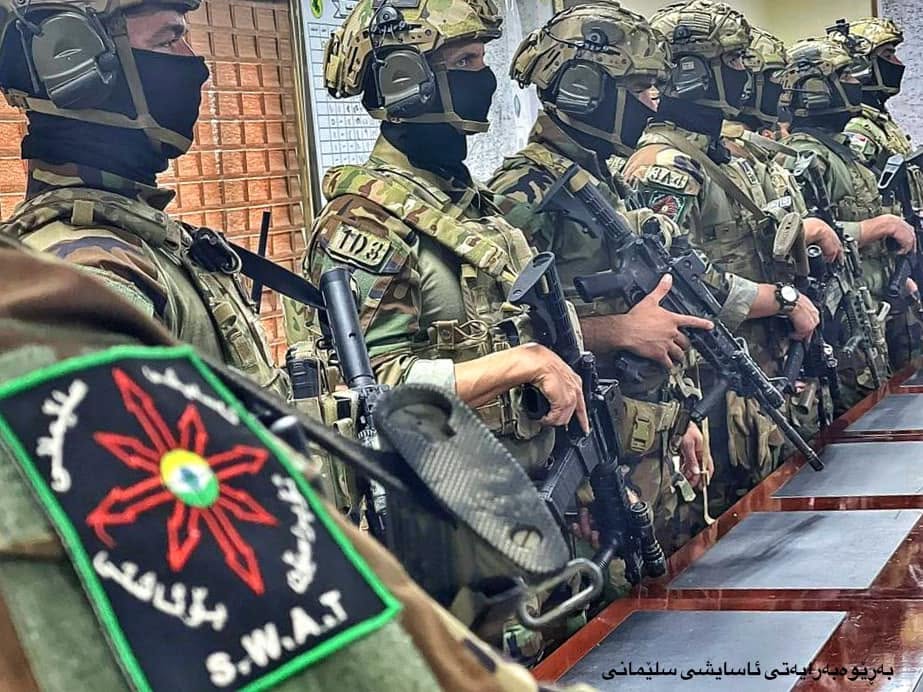
The number of drug-related detainees in the Kurdistan Region has decreased compared to last year, while terrorism-related detentions have seen a notable increase, according to official figures from the Kurdistan Region Security Agency (Asayish).
Key Statements and Focus Areas
Asayish spokesperson Karzan Sherko announced that the agency has launched a comprehensive campaign to eliminate the threat of narcotics and extremist ideology, while actively fostering a culture of peaceful coexistence within the boundaries of the Garmian Administration.
According to official data, 248 terrorism-related detainees were recorded in 2025, whereas 260 individuals have been detained on terrorism charges within the first ten months of this year alone.
The Asayish spokesperson told a press conference that female drug traffickers remain extremely rare within the Kurdistan Region.
However, authorities highlighted that female drug users are now present across all provinces of the Kurdistan Region.
Sherko highlighted that, fortunately, the large volume of narcotics seized in operations is not intended for domestic consumption.
He added that rather, “Kurdistan has become a protective shield for neighboring countries and European nations, as we do not allow our region to be used as a transit zone for drug smuggling.”
FYI
The upcoming security sweep follows a period of heightened cross-border enforcement designed to curb the influx of synthetic narcotics coming into the region.
Historically, the Garmian Administration and the broader Kurdistan Region have faced major vulnerabilities due to porous border crossings used by transnational networks.
To combat this, the General Directorate of Anti-Narcotics has drastically increased daylight sting operations, leading to record-high seizures of amphetamines, crystal meth, and captagon pills before they can be routed westward into Europe.
In tandem with counter-narcotics shifts, regional intelligence tracking suggests that splinter elements of extremist groups continue to exploit localized security gaps.
Consequently, the rise in terrorism-related detentions reflects the Asayish’s proactive, multi-layered operations aimed at neutralizing digital radicalization networks and eliminating latent cells.
Dive Deeper: Handpicked Stories for You
Follow Channel8 for continuous updates:
Kurdistan Intelligence Chief Calls Regional Security a Shared Duty
Asayish Dismantles ISIS Group and Arrests 22 Members
Asayish Arrests Two Drug Traffickers, Seizes 87 Liters of Liquid Crystal Meth
.jpg)