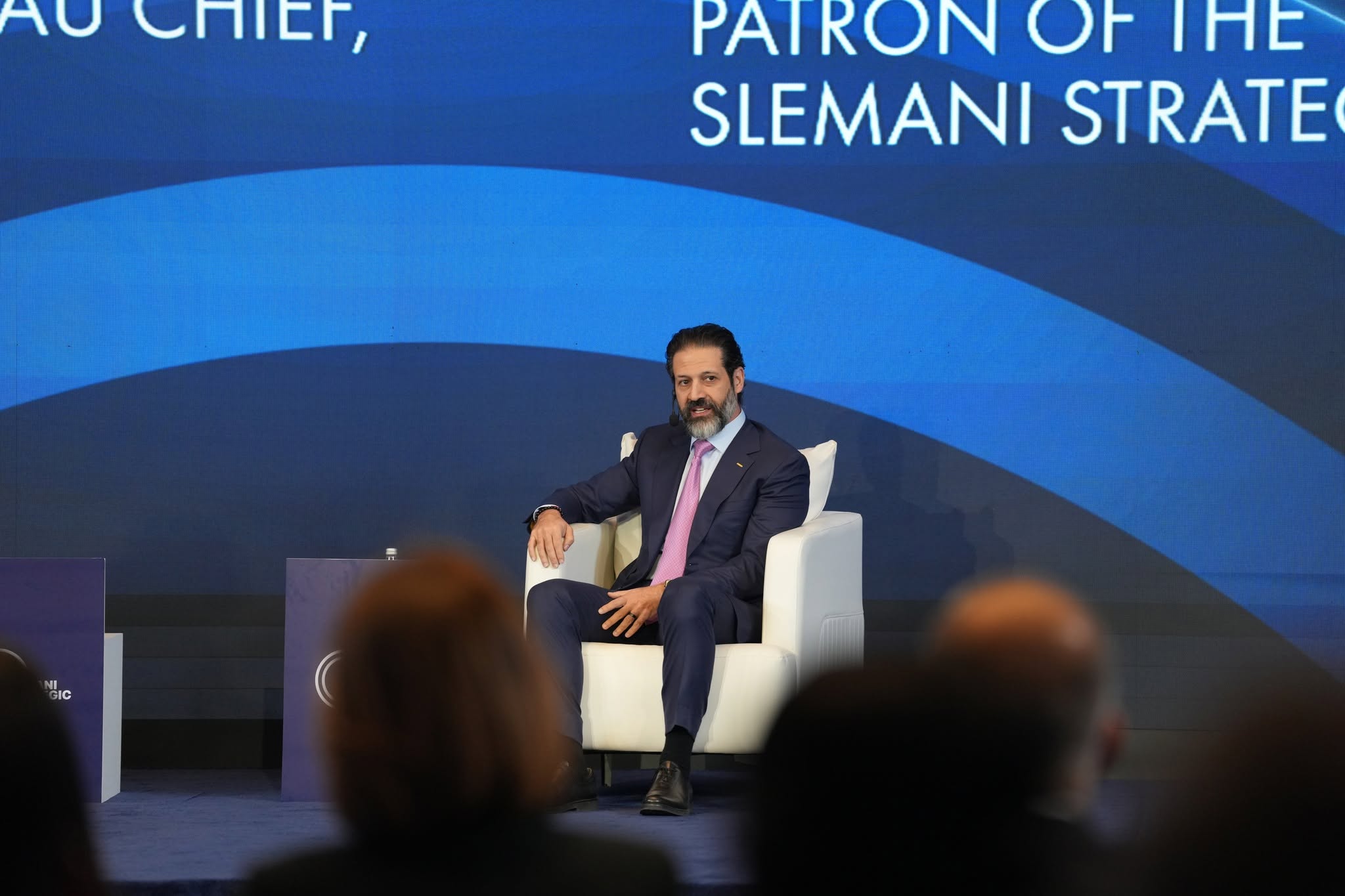
Qubad Talabani Says Kurdistan Region Already Functions as Two Administrations
At a Glance
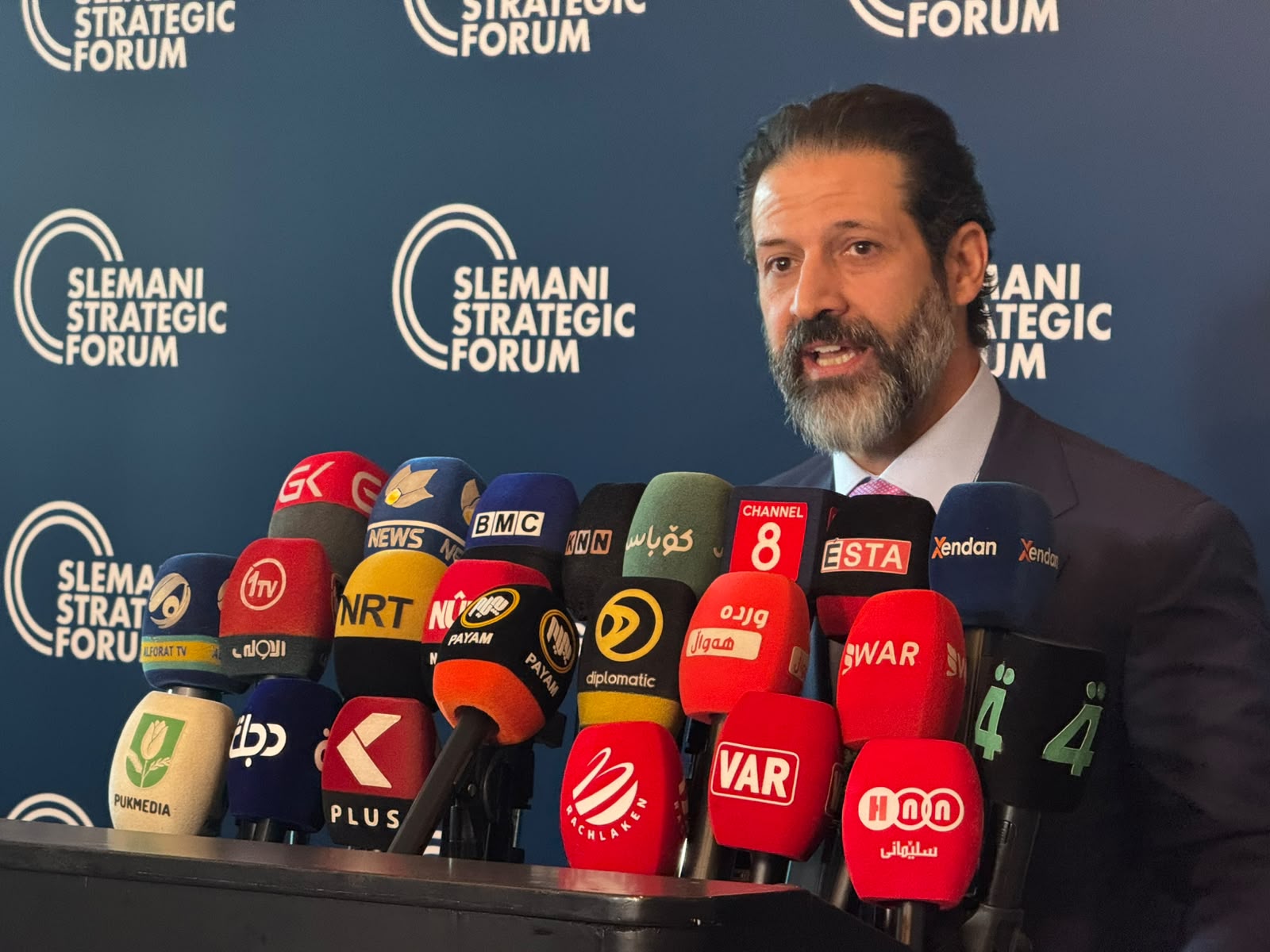
Qubad Talabani addressed a press conference, criticizing personalized governance and calling for clear administrative boundaries in the Kurdistan Region.
He stated that the Region already functions as a dual administration and urged replacing "fake unity" with decentralized authority.
Talabani recalled administrative obstacles during the eighth cabinet caused by political disagreements.
He emphasized that Erbil, Slemani, Duhok and Halabja belong to their respective residents rather than any single political party.
Qubad Talabani held a press conference on Friday, rejecting what he described as "fake unity" and calling for clear institutional boundaries, decentralized authority, and an end to personalized governance across the Kurdistan Region.
Key Statements and Focus Area
Talabani criticized the reliance on personal ties to keep government institutions functioning. "The system is tied to individuals: when relations with and between those individuals are good, the administration moves forward one way or another, good, bad, weak, or strong," he stated.
He urged political leaders to establish clear legal and administrative limits on authority rather than relying on informal arrangements. "We need an administrative relationship that sets clear boundaries, defining where this person’s authority begins and ends, and where that person’s authority begins and ends. Believe me, the process is not very complicated; it is not a huge issue," Talabani said.
Questioning the reality of unified governance in the Kurdistan Region, he pointed to internal checkpoints and existing administrative divisions. "Right now, and not even just now, on November 3, not even November 5, was the Kurdistan Region a single administration? Is it a single administration? In a single administration, are there checkpoints right in the heart of that single administration? No," he added.
Talabani recounted his experience during the eighth cabinet, saying that when KDP President Masoud Barzani became upset with him, his official directives, letters, and administrative decisions suddenly stalled across government directorates.
He stressed that while political disagreements are normal, using disputes as an excuse to halt the work of ministers and directors-general, withhold funds, or freeze appointments and promotions is wrong.
Calling for an end to empty pleasantries, Talabani said the current crisis may serve to "shake up the stagnant waters" so that governance moves beyond personal relationships toward a unity that genuinely serves the public.
He clarified that decentralizing authority does not mean dividing Kurdistan, emphasizing that Erbil, Slemani, Duhok and Halabja belong to their respective citizens and cannot be treated as the private property of whichever party holds power there.
FYI
The Kurdistan Region has faced a prolonged political and legislative impasse since the October 20, 2024 parliamentary elections, in which the KDP won 39 seats and the PUK secured 23.
Although newly elected lawmakers were sworn in on December 2, 2024, deep disagreements over a comprehensive power-sharing agreement left the legislature inactive for nearly two years while the government operated in a caretaker capacity.
The deadlock shifted earlier this month when the Kurdistan Parliament reconvened without political consensus among major blocs.
Backed by the KDP, minority quota representatives, and independent defectors, 52 of the 100 lawmakers attended to surpass the 51-member legal quorum, unanimously electing KDP lawmaker Vala Fareed as Speaker, Christian representative Rami Nouri as Deputy Speaker, and Turkmen representative Muna Qahwachi as Secretary.
The session sparked an immediate backlash from rival parties, with both the PUK and the New Generation Movement boycotting the sitting and condemning it as an attempt to bypass national consensus.
In response, PUK President Bafel Jalal Talabani rejected the legitimacy of the new parliamentary leadership, denounced the administration as a "failed government," and ordered his party’s ministers to immediately withdraw from the cabinet.
Meanwhile, KDP spokesperson Mahmoud Mohammed affirmed his party's readiness to begin immediate negotiations with the PUK and other factions in support of KDP President Masoud Barzani's reconciliation initiative.
Speaking on Thursday, Masrour Barzani , Prime Minister of caretaker KRG, defended the session of parliament as a "moral, legal, and national duty" that was "not directed against anyone or any party," urging all political blocs to return to the legislature and participate in talks to form a new cabinet.
Dive Deeper: Handpicked Stories for You
Follow Channel8 for continuous updates:
Qubad Talabani Calls for Institutional Reform and Decentralized Governance
Bafel Jalal Talabani Outlines Political Vision at Slemani Strategic Forum
Masrour Barzani Urges Parliamentary Dialogue and Rejects Centralized Oil